

Introduction
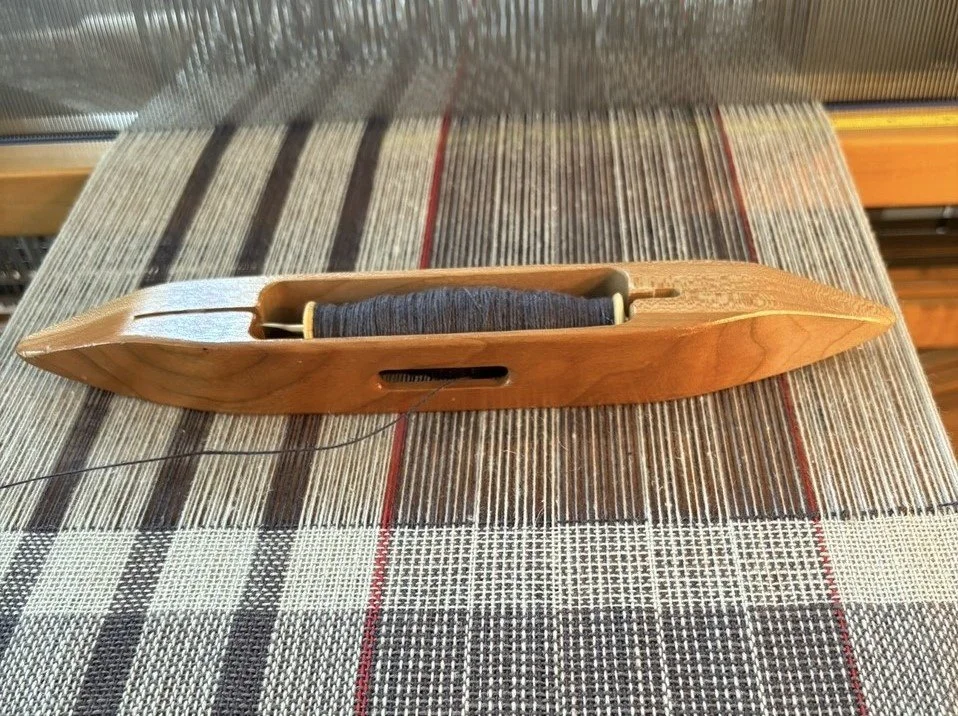
One of my favorite log cabin dishtowels in Maurice Brassard Cottolin (Charcoal, Gris Pale and Wine)
If you’ve ever stared at yarn sizes and content and thought, “Why is this so confusing?” — you’re not alone.
Hi, I’m Mary Ann, and I’m so glad you’re here.
I started Weavers Weft on Etsy in December 2024, and encouraged by the response from the weaving community, I launched our own website six months ago. What began as a small idea has grown into something I care deeply about — helping weavers feel confident choosing the right yarns and tools.
I’m not a textile expert — I’m a weaver who is learning every day. What I can offer is what I’ve learned so far on my journey — the mistakes, the discoveries, the “aha” moments — and I’ll continue to pass along what I learn as I go.
My career was in retail, primarily in Operations and Supply Chain. I eventually led fabric procurement for a large custom window covering retailer. While I understood sourcing and vendors, the textile side was new territory for me. I learned by asking questions, listening carefully, and staying curious — and that curiosity is what eventually led me to weaving.
One day, while visiting a vendor showroom, I asked about their design process. They showed me a table loom where they wove samples in-house as ideas evolved. I was completely captivated.
Then Covid hit. Like many of us, I was home, anxious, and looking for something grounding. Stores were closed, so I did what we all do — I searched online. A week later, an Ashford Rigid Heddle loom arrived at my doorstep.
Magic.
Of course, my weaving journey wasn’t a straight line. There were pauses, frustrations, and plenty of learning curves. One of the biggest hurdles? Fiber selection. Yarn sizes, fiber types, sett charts — it all felt overwhelming.
Through research and experimentation, I discovered Maurice Brassard yarns and quickly understood why so many weavers rely on them. But figuring out how and where to buy them — especially from the U.S. — wasn’t simple.
That experience is why Weavers Weft exists.
My goal is to make weaving less overwhelming and more joyful. To simplify fiber choices. To share what I’ve learned. And to help you feel confident selecting yarns and tools that work for you.
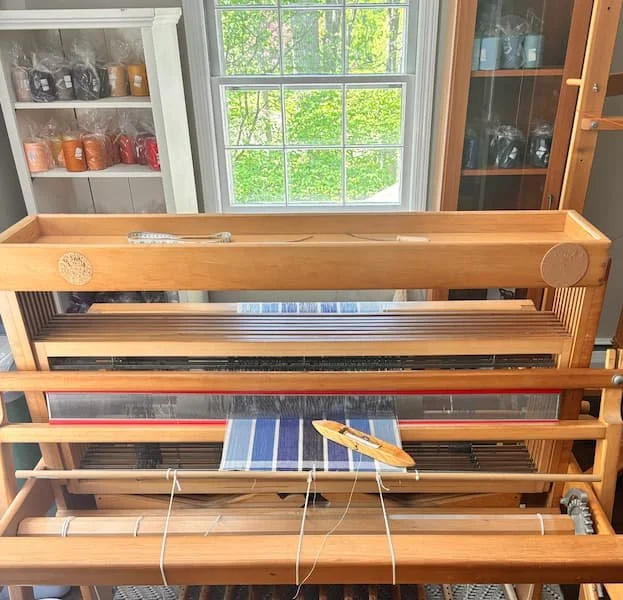
My Happy Place…
Where to Begin — Yarn Selection
When new weavers ask where to begin, my answer is almost always the same: start with cotton. It’s reliable, predictable, and versatile — which builds confidence early on.
At Weavers Weft, we carry Maurice Brassard yarn — a family-owned Canadian mill trusted by generations of weavers. We stock it directly in the U.S. to simplify the process and remove the complications of importing, tariffs, and fees.
Understanding Yarn Sizing
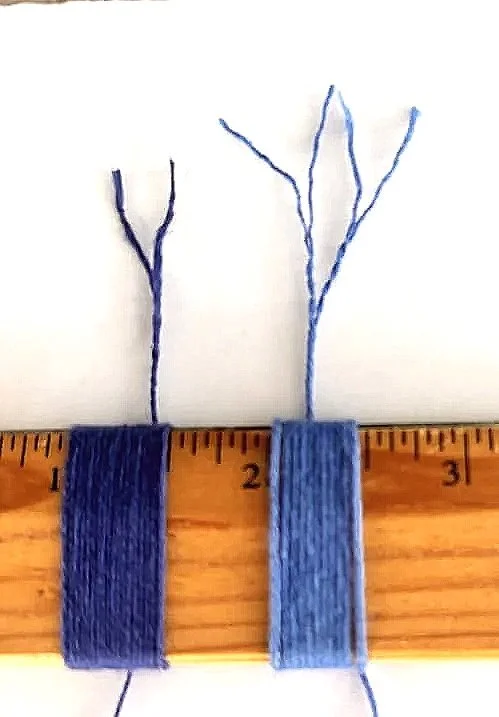
The Royal Blue Yarn on the left is 8/2. It has 2 strands (plies) of Size 8 Cotton.
The Lighter Bleu Yarn on the right is 8/4. It’s thicker and has 4 strands of 8 Cotton.
The yarn size determines how many wraps fit in an inch and therefore suggested Sett. Weavers Weft includes the suggested Sett in every product description for easy reference.
One of the first things that trips up new weavers is yarn sizing.
It looks complicated — but it’s actually very logical once you see the pattern.
Here’s the simple breakdown using 8/2 as an example:
The first number (8) tells you the yarn’s thickness.
Higher number = finer yarn
Lower number = thicker yarn
(It feels backwards at first — I know.)
For cotton, a count of 1 has 840 yards per pound. So a count of 8 would have 6,720 yards per pound.
The second number (2) tells you how many plies are twisted together to make the yarn.
That’s it. Two numbers. Thickness + plies.
Here’s how that translates into projects:
8/2 Cotton is best for towels and scarves. For plain weave, use 16–20 EPI; for twill, 20–24 EPI (ends per inch).
8/4 Cotton is best for rugs, placemats, and baby blankets. For plain weave, use 10–14 EPI; for twill, 12–16 EPI (ends per inch).
We’ll discuss EPI and Sett Charts in a future newsletter but for now, know that EPI stands for ends per inch — simply the number of warp threads that fit in one inch of your reed. It determines how closely packed your weave will be. A higher EPI means a tighter, finer fabric; a lower EPI means a more open, relaxed weave.
Note that in Canada they actually reverse the yarn sizing numbers. Same meaning, just reversed numbers. So 8/2 cotton and 2/8 cotton are the same product. Same for 8/4 and 4/8. It can be a little confusing in the beginning but believe me, you’ll get used to it.

Maurice Brassard Blues
8/2 Cotton
8/2 cotton is often a starting point for beginning weavers, especially for dishtowels — a wonderful first project because they’re practical and manageable in size. 8/2 is absorbent, versatile, and easy to work with. You could weave with it for years and never feel limited.
We carry all 81 Maurice Brassard colors in 8/2.
Each tube is ½ pound (approximately 1,680 yards).
8/4 Cotton
I wove with 8/2 for years before trying 8/4. Today, if I were advising a brand-new weaver, I would consider starting with 8/4.
Because it’s thicker:
Fewer ends are needed in the warp
Threading heddles and reed takes less time
Mistakes are easier to see and correct
8/4 works beautifully for dishtowels, baby blankets, runners, and more.
We stock all 81 colors of 8/4.
Cottolin
Cottolin is a blend of cotton and linen – the linen provides additional absorbency and durability while the cotton keeps it soft and easy to work with. It’s one of my favorites for towels because it softens beautifully with each wash. It’s also lovely for baby blankets. Maurice Brassard cottolin is interchangeable in size with 8/2 cotton, so you can mix and match in warp or weft.

Maurice Brassard Greens
Tube vs. Cone
8/2, 8/4 and Cottolin are all sold on a tube, which is a straight cylinder — the same width from top to bottom. Other yarns (like Harrisville wool) are sold on a cone, which is wider at the base and narrower at the top. You’ll sometimes hear the terms used interchangeably, but they unwind differently. When winding off a tube, I recommend positioning it horizontally (parallel to the floor) rather than vertically like a cone. In my experience, this helps prevent adding extra twist to the yarn. Stay tuned to further blogs for easy ideas to set that up.
Unmercerized vs. Mercerized
Our 8/2 cotton is unmercerized, meaning it has a natural matte finish and excellent absorbency. Mercerized cotton goes through an additional finishing process that adds shine and strength. We also carry 8/4 Perle Cotton (mercerized) in a smaller selection. Most new weavers prefer unmercerized cotton for functional projects like towels.

If you’re just getting started, I highly recommend ordering a Maurice Brassard color card. Seeing swatches of all the shades in person makes a big difference. Screens vary, lighting changes color perception, and having the full palette in your hands makes planning warp and weft combinations much easier. It’s a small investment that can save a lot of second-guessing later. Additionally, when you purchase a Cotton Color Card, you will receive $5 off your next order.
If you ever feel unsure about yarn selection, project ideas, or color combinations, please reach out. I’m always happy to help. My goal is to make your weaving journey simpler, clearer, and more enjoyable. I’ll be sharing tips like this twice a month, along with my favorite tools, hacks, and answers to your most common questions.
Again, thank you for being here.
I’m excited to weave alongside you.

Thrums are the short warp ends left on the loom after you cut off a finished project — too short to weave with, but full of possibility…
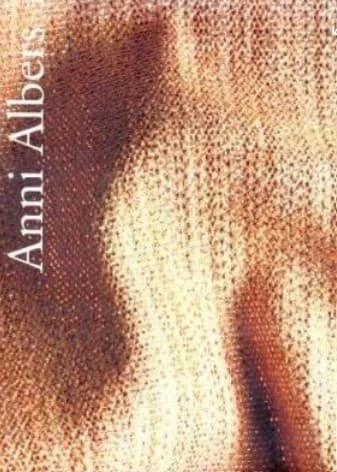
Anni Albers By Weber and Asbaghi
WHAT I’M READING:
Anni Albers — a beautiful exhibition catalogue produced for the centennial retrospective of her work at the Guggenheim — includes lots of full color images of her work. Albers studied and taught at the Bauhaus, the legendary German art school of the 1920s and 30s.
And, as Weavers Weft is located in Connecticut, there's a great local connection — Anni and Josef settled in New Haven, CT in 1950, and she spent the rest of her life in Connecticut, passing away in 1994.
I borrowed my copy from our guild and have enjoyed it immensely.
The Albers Foundation also offers free online mini-workshops on their website. Check it out at albersfoundation.org
WHAT I’M LISTENING TO:
The Long Thread Podcast is a favorite of mine. I love hearing the stories of fellow fiber artists. Their creative journeys and personal stories inspire me as I’m weaving. We recently added Harrisville Wool at Weavers Weft so I particularly enjoyed the recent episode, “Chick Colony, Harrisville Designs.” https://podcasts.apple.com/us/podcast/the-long-thread-podcast/id1508572777
WHAT’S INSPIRING ME:
“Today, we should try to counteract habits that only rarely leave us time to collect ourselves.” Anni Albers
