

Your First Weaving Project
In my last blog I covered yarn basics — how it's measured, what the numbers mean, and why Maurice Brassard 8/2 or 8/4 is such a good place to start. Now comes the part that feels even more daunting for most new weavers: choosing a first project and actually beginning.
And beginning doesn't mean sitting down at a warped loom and making the first pick. It starts earlier than that — deciding on a project, choosing your colors, winding that first warp. That's where the real hurdle is. That moment of committing to something when you're not entirely sure what you're doing yet.
That first step is bigger than most people talk about. It doesn't matter how simple the project is, because nothing feels simple when everything is new. The goal isn't to make something perfect. It's to finish something — and want to do it again.
My first project was dishtowels. I still use them to this day. They are of varying sizes. Definitely not perfect. But I am so proud of myself for making them — for starting — and every time I pull one out of the drawer I'm reminded both of how much I've learned and of how hard it was just to begin.

Start with Dishtowels
Dishtowels are the best first project in weaving. Ask any experienced weaver and they'll tell you the same thing. Here's why they work so well.
You get more than one project on a single warp. A typical dishtowel warp is long enough to weave four to six towels. You go through the warping process once — the most unfamiliar part for beginners — and finish multiple complete objects. Each towel is its own finish line.
As I covered in my last post, Maurice Brassard 8/2 or 8/4 cotton is such a good place to start — and either weight works beautifully for dishtowels. Cotton has no stretch, so you can see your structure clearly as you weave. It doesn't felt or shrink unpredictably. It washes beautifully and gets softer with every use.
Dishtowels are practical. A slightly uneven selvedge doesn't matter. An imperfect beat doesn't matter. What matters is that you finished it, and it lives in your kitchen, and you look at it every day knowing you made it.
Plain weave and twill — the two structures best suited to a first project — are exactly what dishtowels are made for. Everything else you'll ever weave builds from these two foundations. Start here, and you start in exactly the right place.
Plain Weave and Twill: The Two Structures to Know
Plain weave and twill are the foundation of most handwoven cloth — from a first dishtowel to a lifetime of weaving. Here's what each one means.
Plain weave is the simplest interlacement possible: the weft passes over one warp thread and under the next, alternating with every pick. It produces a clean, balanced, durable fabric — ideal for dishtowels.
Twill moves the interlacement forward by one thread with each row, creating the diagonal lines you've seen in denim, herringbone, and quality kitchen linens. A basic 2/2 twill — over two threads, under two — is accessible on a 4-shaft loom and produces a beautifully soft, drapey towel with noticeably more texture than plain weave. It's a small step in setup, and a meaningful step forward in what your cloth looks and feels like.
The beauty of starting with a pattern like this is that you can weave both structures on the same warp.
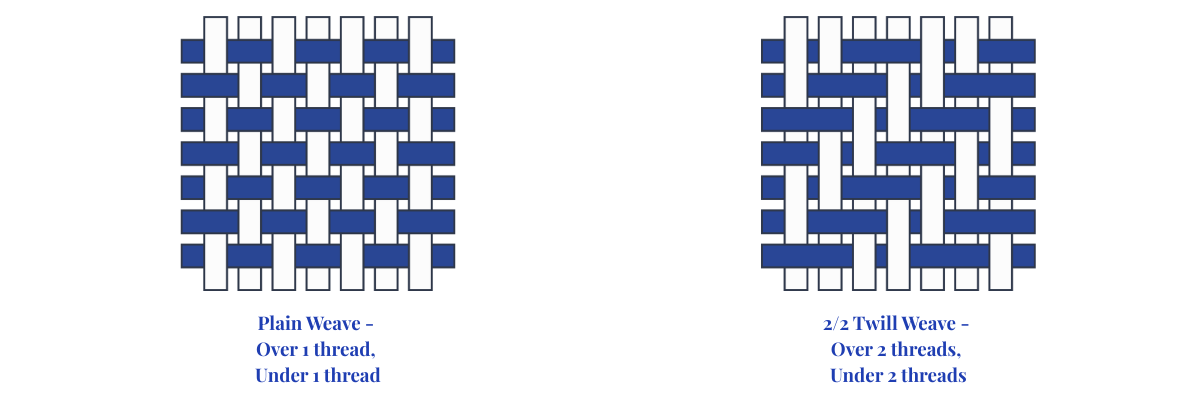
Plain weave and twill. One warp. Seven towels. A great place to begin.
Handwoven Magazine is a trusted resource for weaving patterns and instruction, and they offer a free collection of five beginner projects — towels and placemats — available once you create a free account at handwovenmagazine.com. No subscription required, just an email address.
The pattern I'd point you to first is “Playing with Stripes” by Jean Korus. It's a striped dishtowel pattern for a 4-shaft loom, woven in 8/2 unmercerized cotton at 20 EPI. The warp is set up in three colors — the pattern uses white, blue, and yellow, but you can substitute any colors you like. Maurice Brassard 8/2 comes in 81 colors, so the combinations are truly endless.
From that single striped warp, you weave seven different towels. What makes this such a good learning project is the progression built into it. Towel 1 is woven in plain weave — warp stripes only, clean and straightforward. Towel 2 is the exact same warp woven in 2/2 twill — and suddenly the fabric has a completely different hand, drape, and surface, even though nothing changed except the treadling sequence. Seeing that shift happen on your own loom, on your own cloth, is one of those moments that makes weaving genuinely exciting. Towels 3 through 7 then introduce weft color stripes, borders, and plaids using the same three colors in different sequences — so by the time you cut the warp off the loom, you have seven distinct towels and a real understanding of how structure and color interact.
The pattern includes full warping instructions, a warp color order, treadling sequences for both plain weave and twill, and finishing steps. It's one of the most complete and instructive first warps you can put on a loom.
The Playing with Stripes pattern is written for 8/2 cotton — the workhorse of the weaving world.
Some Basic Weaving Terms Explained
Pattern instructions assume you know a few things — and if you don't, even a simple pattern can feel like reading a foreign language. We’ve created a glossary and will add key terms with each blog. Here are a few of the terms you'll likely encounter in a weaving pattern, with plain-English definitions that are added to the glossary with this blog:
Beat, Draft, End, EPI, Hemstitch, Pick, PPI, Reed, Sett, Shed, Shuttle, Sley, Selvedge, Treadling, Warp, Weft
Check out the details at GLOSSARY.

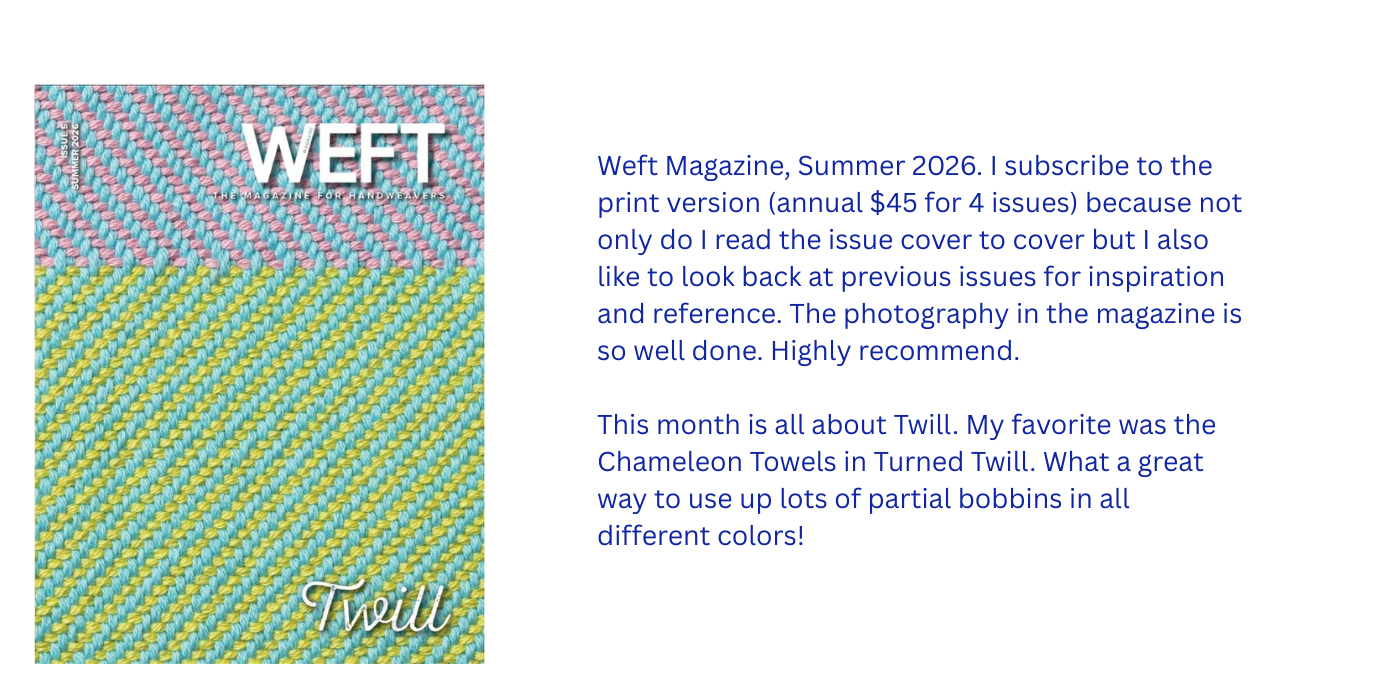
What I’m Reading:
What I’m Listening To:
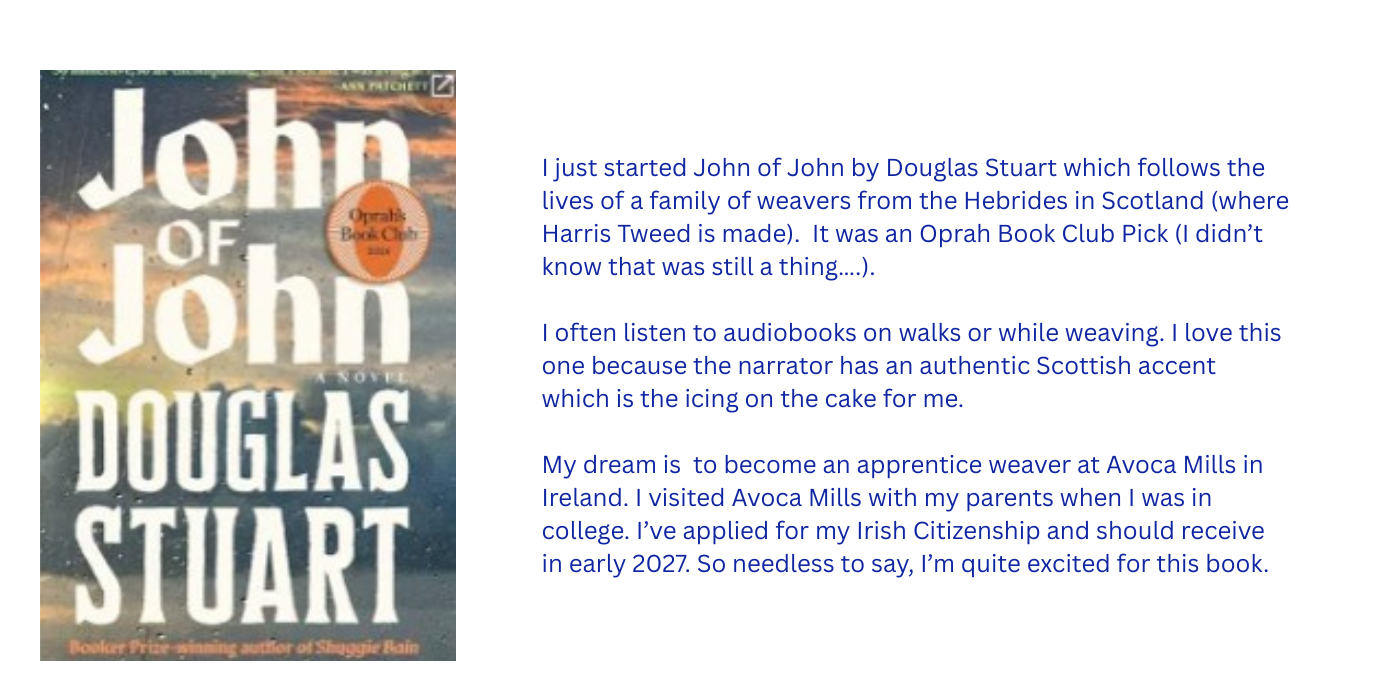
What I’m thinking about:

Browse the full collection of books, podcasts, and ideas — it all lives on our Weaving Resources page.
A Note Before You Go…
Start. That's the whole note.
Find the Handwoven free pattern collection, pick Playing with Stripes, choose your three colors, and wind that first warp. Your selvedges won't be perfect. Your towels may not all be the same length. None of that matters.
What matters is that you started.
And if you pull one of those towels out of a drawer a few months or years from now — still using it, still a little proud — you'll know exactly what I mean.
As always, HAPPY WEAVING!

© Weavers Weft | WeaversWeft.com
Find us on Instagram @weaversweft
